Hospitals
Nurses may work in medical-surgical units, emergency care, critical care, maternity, surgery and many other hospital settings.
NURSING CAREER GUIDE
Compare nursing roles, educational pathways, specialties, work settings, licensure requirements and career outlook information as you explore your next step in nursing.
Compare Beckfield Nursing Programs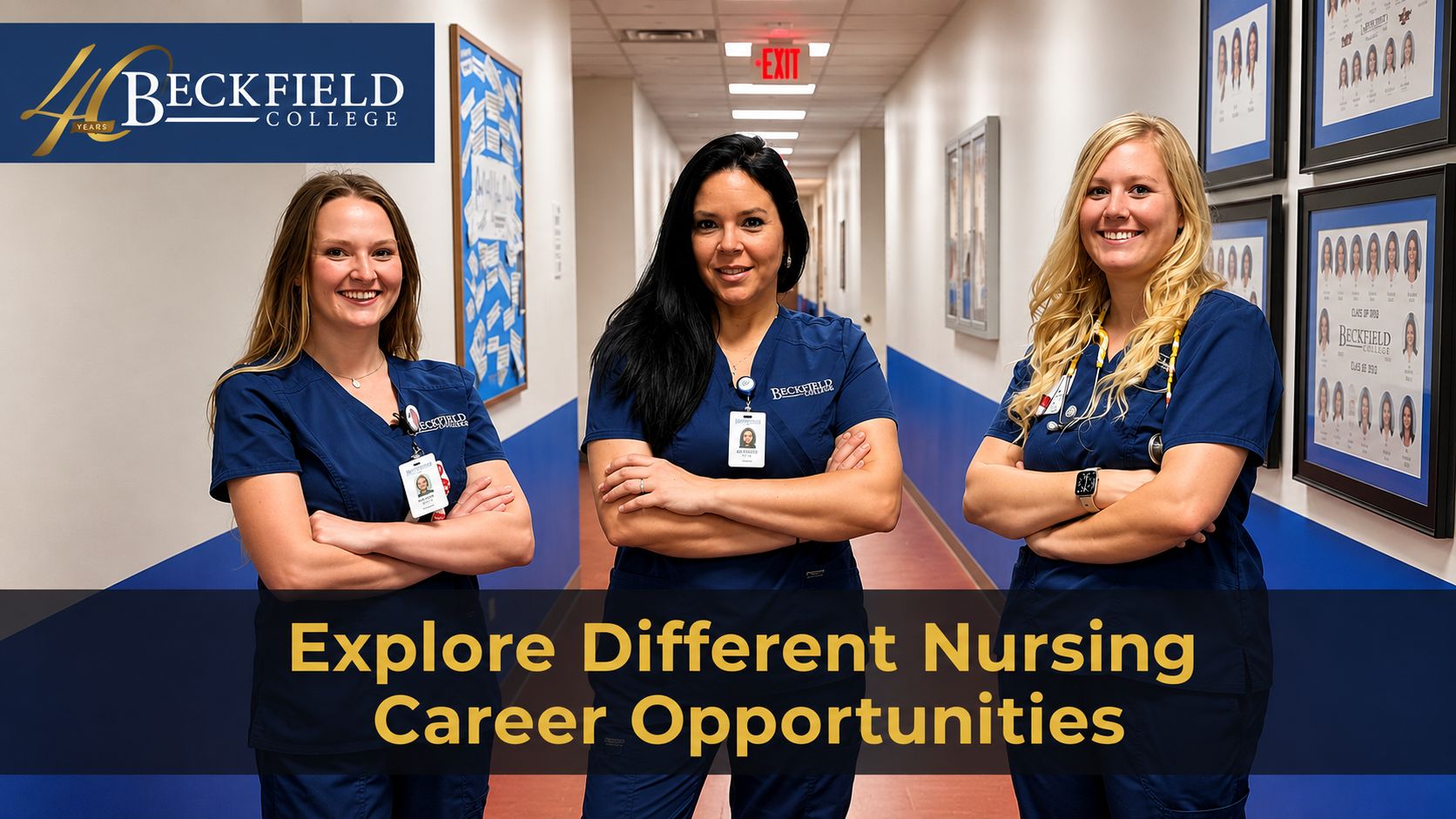
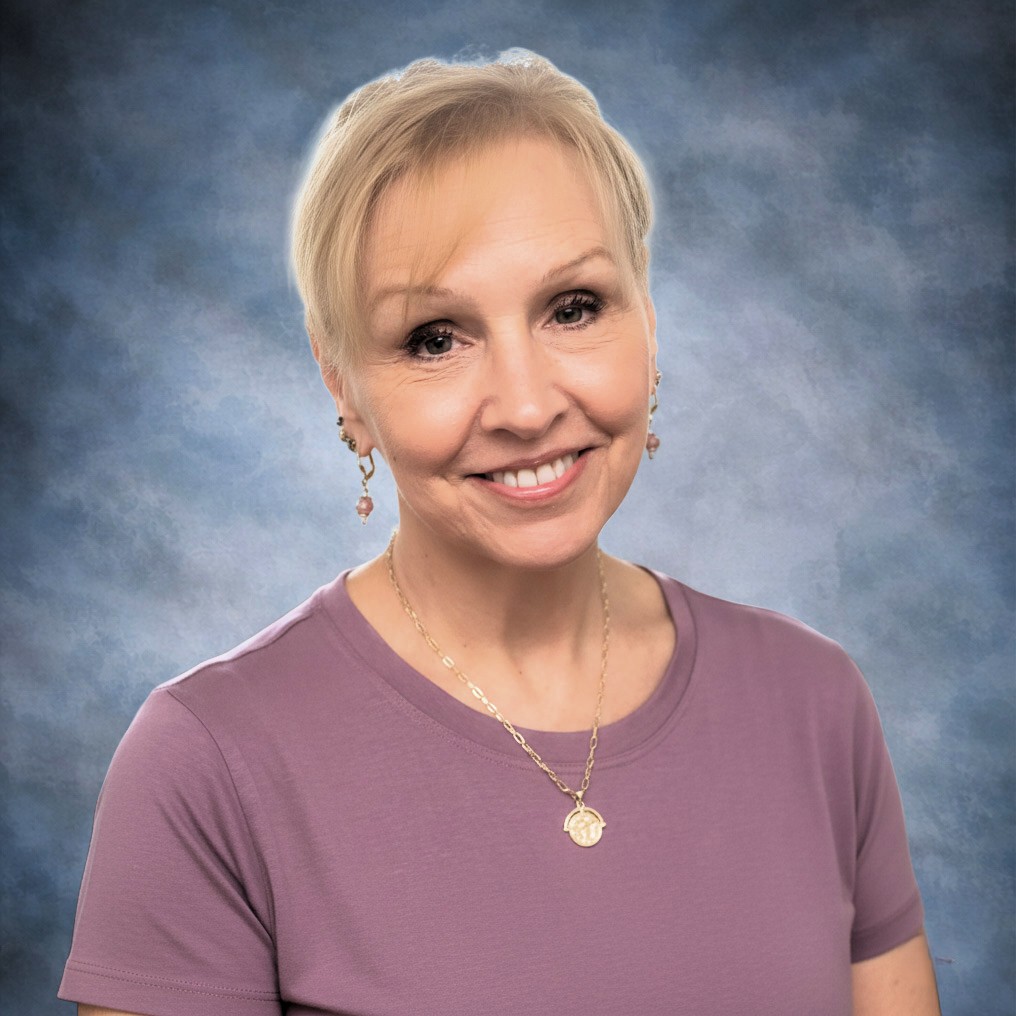
Dr. Mary Anne Schneider is a doctoral-prepared Registered Nurse and nursing educator at Beckfield College. She serves as Program Director for Beckfield's Practical Nursing program and brings experience in nursing education, practical nursing preparation, and student-centered healthcare training.
UNDERSTANDING YOUR OPTIONS
Nursing includes a variety of career paths, educational routes, specialties and work environments.
Someone exploring healthcare may begin in a nursing-support role, pursue licensure as a practical nurse, prepare for registered nurse licensure through an associate or bachelor's degree, or continue their education after becoming an RN.
Understanding these differences can help you compare the education, licensure and professional requirements associated with each path.
Beckfield offers a Diploma in Practical Nursing, Associate of Applied Science in Nursing, Bachelor of Science in Nursing, and an online RN-to-BSN degree-completion pathway for qualified registered nurses.
Compare all four nursing pathwaysNURSING CAREER PATHS
Nursing careers are better understood as different professional pathways rather than a simple hierarchy. Each role has its own education, responsibilities and regulatory requirements.
| Path | Typical Education or Preparation | Licensure / Credential |
|---|---|---|
| Nursing Assistant / CNA | State-approved training requirements vary | Certification or registry requirements vary by state |
| Licensed Practical Nurse (LPN) | Practical nursing education | NCLEX-PN and applicable state licensure requirements |
| Registered Nurse — Associate Path | Associate-level nursing education | NCLEX-RN and applicable state licensure requirements |
| Registered Nurse — BSN Path | Bachelor of Science in Nursing | NCLEX-RN and applicable state licensure requirements |
| RN-to-BSN | Bachelor's degree completion for an existing RN | Applicant is already a licensed RN |
| Advanced Practice Nursing | Graduate nursing education | Additional state licensure and/or certification requirements |
The U.S. Bureau of Labor Statistics recognizes associate, bachelor's, and approved diploma programs as educational pathways into registered nursing. Registered nurses must meet applicable state licensure requirements. Source: U.S. Bureau of Labor Statistics
HEALTHCARE SUPPORT
Certified Nursing Assistants, sometimes referred to as nursing assistants or nurse aides, are healthcare support professionals rather than licensed nurses.
They commonly help patients with basic care and activities of daily living while working with nurses and other healthcare professionals. Requirements differ by state. Nursing assistants may need to complete a state-approved education program and competency examination or satisfy other state-specific requirements.
For someone comparing healthcare careers, nursing-assistant experience can provide exposure to patient care, but becoming a CNA and becoming a licensed practical or registered nurse are separate professional paths.
LICENSED PRACTICAL NURSING
Licensed Practical Nurses provide basic nursing and medical care. Specific duties and scope of practice depend on state law, the care setting and employer policies.
The U.S. Bureau of Labor Statistics notes that LPNs work in settings such as nursing and residential care facilities, hospitals, physicians' offices and private homes.
REGISTERED NURSING
Registered nurses provide and coordinate patient care, educate patients and families, and work with physicians and other healthcare professionals.
Specific RN responsibilities vary by practice setting, employer, state law, experience and specialty.
You may see associate-level nursing education described as an ADN, ASN or AASN. The exact degree title varies by institution. Beckfield College awards an Associate of Applied Science in Nursing (AASN).
BACHELOR'S-LEVEL NURSING EDUCATION
A traditional prelicensure Bachelor of Science in Nursing provides preparation for registered nursing while adding broader baccalaureate-level study.
At Beckfield, BSN coursework includes areas such as nursing leadership, evidence-based practice, nursing informatics and technology, quality and safety, population-focused nursing, research, legal and ethical issues, and other nursing and general education coursework.
A BSN does not represent a separate RN license from an associate-degree RN pathway. It is a different educational pathway toward registered nurse licensure.
Employers may prefer or require bachelor's-level nursing education for certain positions. Education requirements vary by employer, role and practice setting.
FOR LICENSED REGISTERED NURSES
An RN-to-BSN program is different from a prelicensure nursing program. It is designed for nurses who already hold RN licensure and want to complete bachelor's-level nursing education.
Beckfield's current admissions requirements include an eligible associate degree, a current unrestricted RN license, and specified general education coursework.
Because students enter this program as registered nurses, the RN-to-BSN is not another pathway to initial RN licensure.
WORK ENVIRONMENTS
Nursing careers are not limited to hospitals. Work environment can influence schedules, patient populations, responsibilities and the type of experience a nurse develops.
Nurses may work in medical-surgical units, emergency care, critical care, maternity, surgery and many other hospital settings.
Office-based nursing may involve patient assessment, education, care coordination and support for clinical procedures.
Nurses may support patients receiving procedures, treatment, follow-up care and other ambulatory services.
Home-health nurses provide care to patients in their residences based on role, employer and applicable professional requirements.
Nursing and residential care facilities employ nurses who support patients with ongoing healthcare and daily care needs.
Nursing roles may also be available in educational, community and public-health environments.
AREAS OF PRACTICE
Nurses may develop experience in many clinical areas. Specialty requirements vary, and employers may require professional experience, additional training, continuing education or specialty certification for some positions.
Care for adults with a range of medical and surgical needs.
Care for patients experiencing urgent or acute conditions.
Care for patients requiring intensive monitoring and treatment.
Care focused on infants, children and adolescents.
Care associated with pregnancy, childbirth, postpartum health and newborns.
Care related to behavioral and mental health conditions.
Care focused on older adults.
Care for patients experiencing cancer and cancer treatment.
Nursing care surrounding surgical procedures.
Population-focused health, education and community-based care.
U.S. LABOR-MARKET DATA
National labor-market information can provide useful context when researching a nursing career. It should not be interpreted as a prediction of an individual graduate's employment or salary.
BLS projects approximately 51,800 LPN/LVN openings and 180,800 RN openings nationally per year on average during the 2025–2035 period. Many openings are expected to result from both employment growth and the need to replace workers leaving the occupation.
Source: U.S. Bureau of Labor Statistics, Occupational Outlook Handbook. Wage figures are national median wages for May 2025, not starting salaries, local wage estimates or Beckfield College graduate outcomes. Actual employment opportunities and compensation vary by location, employer, experience, credentials and other factors. Beckfield College does not guarantee employment or salary.
CINCINNATI & NORTHERN KENTUCKY
Students researching nursing careers in Cincinnati, Ohio, Florence, Kentucky and the Northern Kentucky region should consider both occupation-level information and current local employment conditions.
Job availability, compensation, preferred education and specialty requirements can differ by employer and location. Prospective nurses should review current state and metropolitan-area labor-market information along with individual employer requirements rather than assuming that every nursing specialty has the same local demand.
The U.S. Bureau of Labor Statistics provides state and area employment and wage information for registered nurses and licensed practical nurses.
CONTINUING YOUR EDUCATION
Nursing education can continue throughout a career. A licensed practical nurse may later pursue education toward registered nursing. An associate-degree RN may choose to complete a BSN. Registered nurses may also pursue graduate education, specialty certification or other professional development depending on their goals.
Education alone does not guarantee promotion, a particular nursing position or increased compensation. Employer requirements, professional experience, licensure, specialty credentials and the needs of a particular organization may all affect career advancement.
FIND YOUR PATH
Beckfield College offers nursing pathways for students beginning their nursing education, preparing for registered nursing licensure, or continuing their education after becoming an RN.
A practical nursing education pathway designed to support preparation for the NCLEX-PN examination and applicable LPN licensure requirements.
Associate-level nursing education designed to support preparation for the NCLEX-RN examination and applicable RN licensure requirements.
Bachelor's-level prelicensure nursing education designed to support preparation for the NCLEX-RN examination and applicable RN licensure requirements.
An online bachelor's degree-completion pathway for qualified registered nurses who want to build on previous nursing education.
Program-length information reflects the approved normal program lengths identified in Beckfield College's current academic information. Actual completion time may vary because of transfer credit, withdrawals, course repetition, leaves of absence, scheduling, academic progress and other factors.
IMPORTANT INFORMATION
Nursing education, professional licensure, institutional accreditation, programmatic accreditation and state-board approval are related but distinct.
Completing a nursing education program does not automatically result in professional licensure.
Licensure eligibility may depend on board requirements, background checks, clinical eligibility, required documentation, successful completion of applicable examinations and other requirements.
Beckfield College is institutionally accredited by the Accrediting Bureau of Health Education Schools (ABHES).
The Practical Nursing, Associate of Applied Science in Nursing and Bachelor of Science in Nursing programs are identified in the current catalog as approved by the Kentucky Board of Nursing.
The Florence Practical Nursing and AASN programs hold programmatic accreditation status from the National League for Nursing Commission for Nursing Education Accreditation (NLN CNEA). The catalog states that the baccalaureate nursing degree program is accredited by the Commission on Collegiate Nursing Education (CCNE).
Programmatic accreditation and program approval apply only to the specific programs identified and do not apply to every Beckfield College program.
KENTUCKY BOARD OF NURSING
Kentucky Board of Nursing benchmark information may include NCLEX pass rates, graduation rates, nursing faculty turnover, program administrator turnover and substantiated grievance and appeal data.
NCLEX pass rates are one measure of program outcomes and do not guarantee individual student performance, licensure, employment or salary.
STUDENT & GRADUATE SUPPORT
Beckfield College Career Services provides employment-related assistance to students and graduates, including resources for résumé development, interview preparation, career planning, networking and the job-search process.
Beckfield College graduates continue to have access to Career Services for employment-related assistance.
Career Services assistance does not guarantee employment, placement, salary, licensure, certification or any other employment outcome.
Explore Career ServicesRésumé preparation
Interview preparation
Career planning
Job-search support
Networking & professional development
Career events when available
COMMON QUESTIONS
Use these answers as a general starting point. Professional and program requirements should be verified with the applicable institution, employer or regulatory authority.
No. A Certified Nursing Assistant is a nursing-support professional rather than a licensed practical or registered nurse. State training, competency and certification requirements vary.
Both are licensed nursing roles, but their education, scope of practice and responsibilities differ. Scope of practice is established by state law and other applicable requirements.
They are both associate-level nursing degree titles, but they are not identical credential names. Institutions may award an ADN, ASN, AAS in Nursing or AASN. Beckfield College awards the Associate of Applied Science in Nursing (AASN).
Associate-level nursing education is one recognized pathway toward RN licensure. Graduates must still satisfy applicable state board requirements and pass the NCLEX-RN before obtaining licensure.
Both prelicensure associate-degree and BSN graduates seeking RN licensure take the NCLEX-RN, subject to eligibility requirements established by the applicable state board of nursing.
No. Beckfield's RN-to-BSN is a bachelor's degree-completion program for applicants who already possess a current, unrestricted RN license.
The current catalog lists normal completion at 55 weeks for Practical Nursing, 88 weeks for the AASN, 132 weeks for the traditional BSN and 66 weeks for the RN-to-BSN.
These figures assume continuous full-time enrollment and successful completion of required coursework. Actual completion time may vary because of transfer credit, withdrawals, course repetition, leaves of absence, scheduling and other factors.
SOURCES & FURTHER INFORMATION
YOUR NEXT STEP
Compare Beckfield College's Practical Nursing, Associate of Applied Science in Nursing, Bachelor of Science in Nursing and RN-to-BSN pathways to learn more about program requirements, curriculum, delivery format and next steps.
Compare Beckfield Nursing Programs