Nursing Care Models
Nursing care models help explain how nurses and healthcare teams organize responsibilities, communicate, and support patient care in real clinical settings.
Nursing is more than a job title. In different healthcare settings, nurses may organize patient care in different ways depending on patient needs, staffing, workflow, and clinical priorities. These approaches are often called nursing care models.
A nursing care model helps define how nurses and other members of the healthcare team coordinate responsibilities, communicate with one another, and support patient care. While the exact structure may vary by facility, unit, and patient population, understanding common nursing care models can help future nurses better understand how care is delivered in clinical settings.
Below are several common nursing care models students may learn about as part of their nursing education.
What Is a Nursing Care Model?
A nursing care model is a framework used to organize how nursing care is planned, assigned, delivered, and evaluated. These models may influence who is responsible for specific tasks, how nurses communicate with patients and team members, and how care is coordinated during a shift.
Healthcare organizations may use one model or combine elements from several models depending on staffing, patient acuity, unit type, and organizational needs.
Common nursing care models include:
- Primary nursing
- Functional nursing
- Team nursing
- Total patient care
- Case management
- Patient-centered care
Each model has strengths and limitations, and nurses may encounter different approaches throughout their careers.
Primary Nursing

Primary nursing is a care model where one registered nurse has primary responsibility for coordinating a patient’s care during a defined period of care. The primary nurse may help develop the care plan, communicate with the patient and family, coordinate with the healthcare team, and evaluate the patient’s progress.
This model can support continuity of care because the patient may interact with the same nurse or a smaller group of nurses more consistently. It may also help strengthen communication between the nurse, patient, and family.
However, primary nursing may require more experienced nurses, strong clinical judgment, and staffing resources that allow the nurse to manage a broader scope of responsibility.
Functional Nursing

Functional nursing organizes care by task. Under this model, members of the healthcare team are assigned specific duties, such as taking vital signs, administering medications, assisting with hygiene, or documenting certain aspects of care.
This approach may help teams complete many tasks efficiently, especially in settings where patient volume is high or staffing patterns require a task-based workflow.
One limitation is that care can feel more fragmented if communication is not strong. Because different team members may complete different tasks for the same patient, clear documentation and teamwork are important.
Team Nursing

Team nursing is a model where a group of healthcare professionals works together to care for a group of patients. A registered nurse often serves as the team leader and coordinates care among licensed practical nurses, nursing assistants, and other team members within their scope of practice.
This model can support collaboration and help team members use their skills effectively. It may also help organize care when patient needs vary across a unit.
Strong communication is essential in team nursing. The team leader must understand patient priorities, delegate appropriately, and help ensure that care is coordinated throughout the shift.
Total Patient Care
Total patient care is a model in which one nurse provides most or all of the nursing care for assigned patients during a shift. This may include assessment, medication administration, patient education, documentation, and coordination with the care team.
This model can support direct nurse-patient interaction and clear accountability during a shift. It may be used in settings where patients require close monitoring or more individualized nursing attention.
Because this model places significant responsibility on the assigned nurse, it requires strong time management, clinical knowledge, and prioritization skills.
Case Management
Case management focuses on coordinating care across services, providers, and settings. Nurses who work in case management may help support discharge planning, care transitions, patient education, resource coordination, and communication among healthcare providers.
This model is especially important when patients have complex needs, chronic conditions, or require care after leaving the hospital.
Case management can help connect patients with resources and support more organized care transitions.
Patient-Centered Care
Patient-centered care focuses on the patient’s needs, preferences, values, and goals. In this approach, nurses consider the whole person, not only the diagnosis or immediate clinical concern.
Patient-centered care may include listening to the patient’s concerns, involving the patient and family in care discussions when appropriate, providing education, and respecting cultural, emotional, and personal needs.
This approach is widely used across healthcare because it supports communication, trust, and individualized care.
Why Nursing Care Models Matter

Nursing care models matter because they shape how care is delivered. They can affect communication, delegation, patient experience, workflow, and coordination among healthcare professionals.
For nursing students, learning about care models can help build a stronger understanding of how nurses function within healthcare teams. These models also help students think about patient care from a broader perspective, including teamwork, leadership, prioritization, and accountability.
How Nursing Students Learn About Patient Care
Nursing education introduces students to concepts that support safe, ethical, and patient-centered care. Depending on the program, students may study topics such as anatomy and physiology, pharmacology, nursing fundamentals, health assessment, clinical judgment, patient communication, and professional nursing responsibilities.
Clinical and hands-on learning experiences may also help students connect classroom concepts to real-world healthcare settings, subject to program requirements, clinical site availability, and applicable policies.
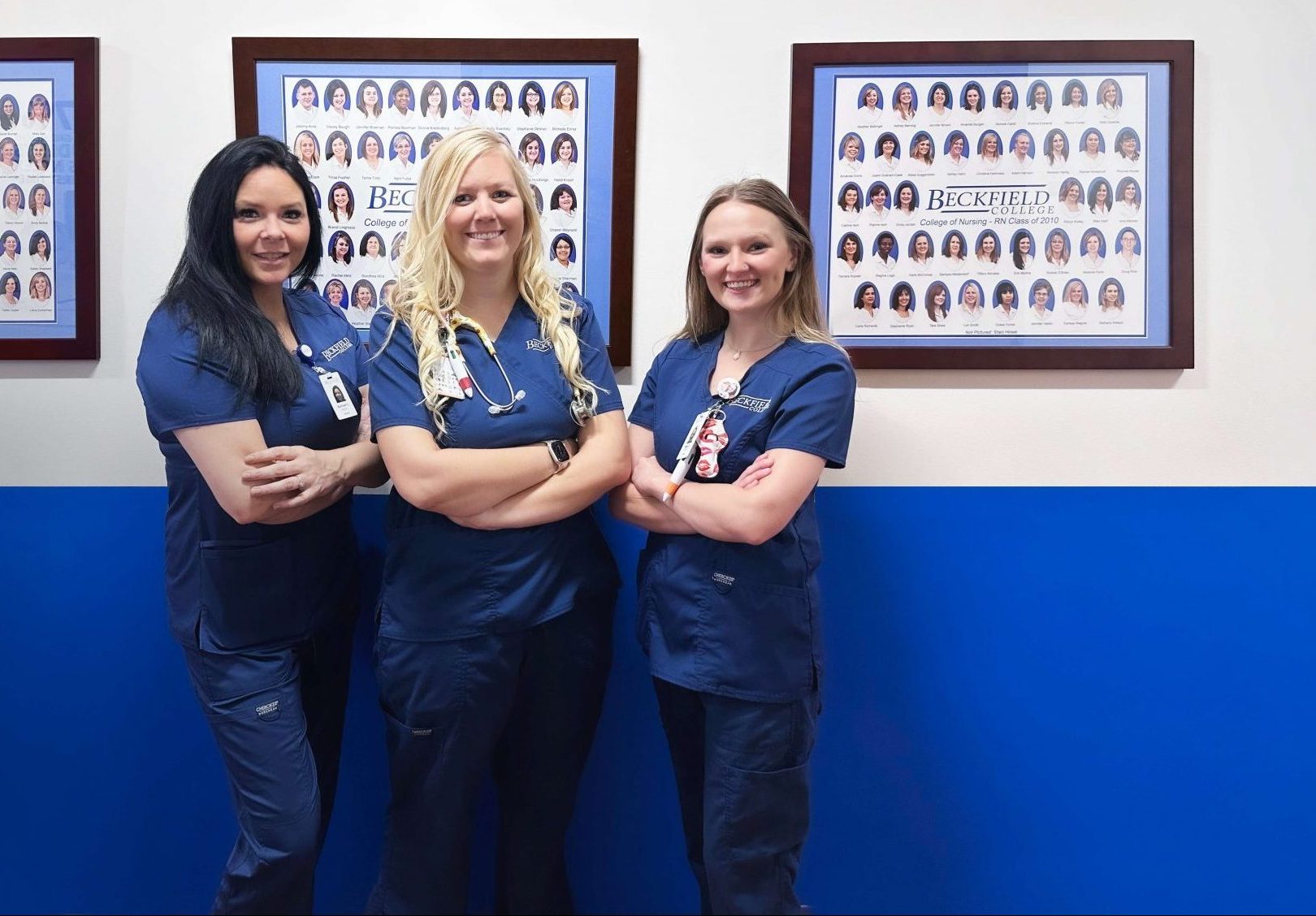
At Beckfield College, nursing programs are designed to help students build knowledge and skills that support preparation for nursing practice. Program requirements, admissions criteria, schedules, clinical experiences, and licensure-related requirements vary by program.
Explore Nursing Programs at Beckfield College
Beckfield College offers nursing pathways for students who are ready to start their education, continue their nursing journey, or advance from RN to BSN. Explore the option that best fits your current goal.
Practical Nursing (PN)
A practical nursing pathway for students who want to prepare for entry-level nursing responsibilities and eligibility to pursue practical nursing licensure.
Associate of Applied Science in Nursing (AASN)
An associate degree nursing pathway for students who want to prepare for registered nursing responsibilities and eligibility to pursue RN licensure.
Bachelor of Science in Nursing (BSN)
A bachelor’s degree nursing pathway for students who want to prepare for professional nursing practice and eligibility to pursue RN licensure.
RN to BSN
A bachelor’s degree completion pathway designed for licensed registered nurses who want to continue their education and earn a BSN.
Ready to Learn More?
Beckfield College can help you explore nursing program options, admissions steps, financial aid information, and upcoming start opportunities.
Request information today to connect with the admissions team and learn which nursing pathway may be the right fit for your goals.
Helpful Links for Prospective Nursing Students
Important Consumer Information
Before enrolling, students are encouraged to review Beckfield College’s official consumer information, academic catalog, accreditation and approvals, admissions requirements, financial aid information, and program-specific disclosures.
Nursing program completion does not guarantee licensure, employment, salary, or individual exam performance. Licensure eligibility may depend on board requirements, background checks, clinical eligibility, successful completion of required coursework, and other applicable rules or requirements.
References
References and source links should be reviewed and updated before publishing. Recommended references include peer-reviewed articles, government sources, nursing education organizations, and recognized healthcare education publishers.