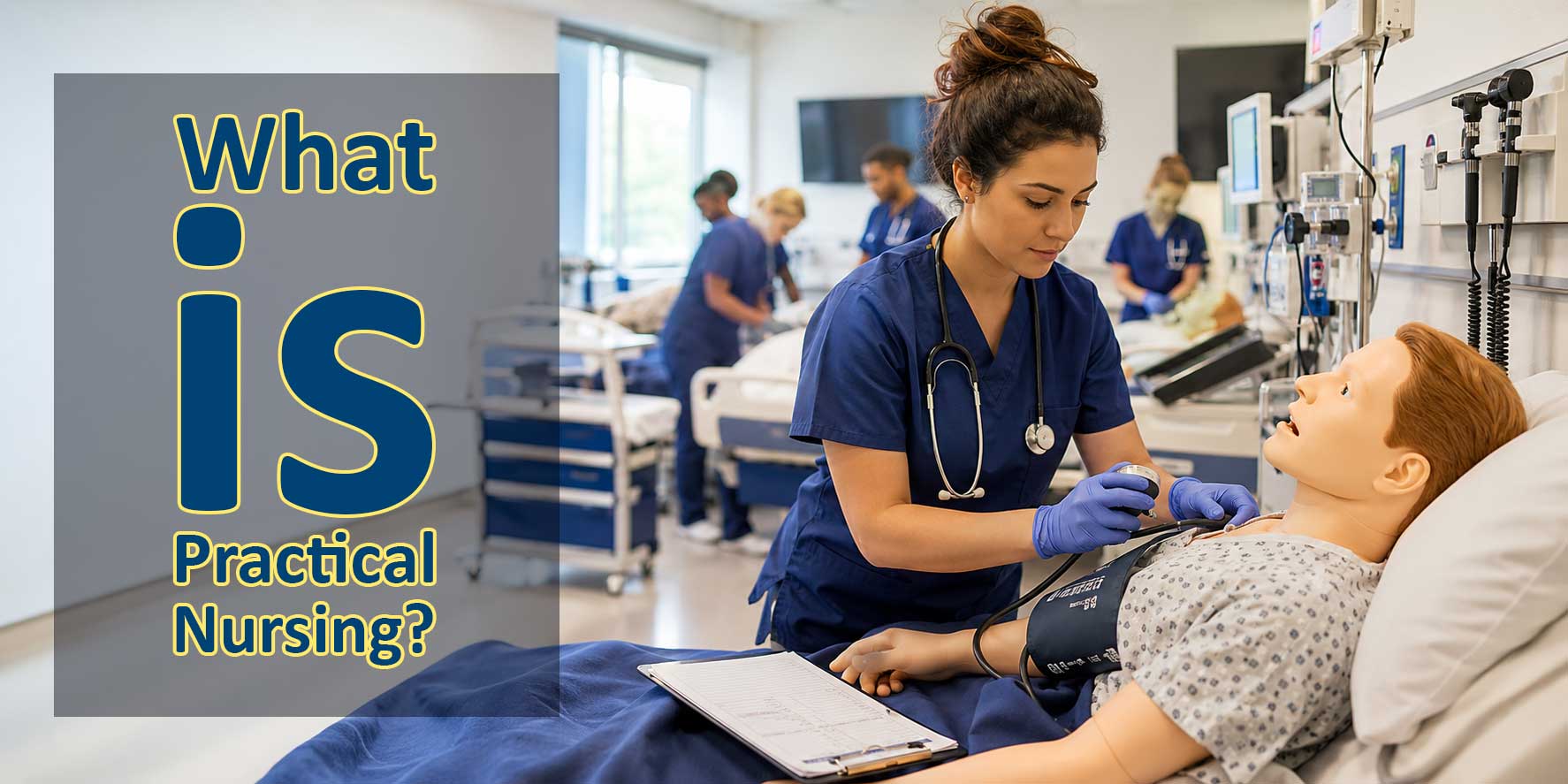
What Is Practical Nursing?
Practical nursing is a healthcare profession focused on direct patient care. Licensed Practical Nurses, commonly called LPNs, help patients receive compassionate, hands-on care under the supervision of Registered Nurses, physicians, and other licensed healthcare providers.
Last Reviewed: July 2026
What Is Practical Nursing?
Practical nursing is the field of nursing practiced by Licensed Practical Nurses, or LPNs. LPNs provide direct patient care, monitor patient health, assist with daily care needs, and support treatment plans under the supervision of Registered Nurses, physicians, and other licensed healthcare providers.
Practical nursing can be a strong first step for students who want to enter healthcare, work directly with patients, and build a foundation for future nursing education.
What Is a Licensed Practical Nurse?
A Licensed Practical Nurse, commonly called an LPN, is a licensed nursing professional who provides basic nursing care within a defined scope of practice. LPNs often work closely with Registered Nurses, physicians, and other members of the healthcare team.
In some states, the title Licensed Vocational Nurse, or LVN, is used instead of LPN. The role is similar, but licensure requirements and scope of practice vary by state.
What Does a Practical Nurse Do?
Licensed Practical Nurses provide hands-on care and help monitor patient needs throughout the day. Specific responsibilities vary based on state regulations, employer policies, and the healthcare setting.
Common LPN Responsibilities
- Monitoring vital signs
- Recording patient information
- Assisting with personal care needs
- Changing wound dressings
- Collecting laboratory specimens
- Administering medications within scope of practice
- Supporting treatment plans
- Communicating patient updates to the care team
Important Practical Nursing Skills
- Compassion
- Clear communication
- Attention to detail
- Professionalism
- Organization
- Patient-focused care
- Teamwork
- Dependability
Where Do LPNs Work?
Practical nurses may work in a variety of healthcare environments. Some LPNs provide ongoing care in long-term care settings, while others support patients in clinics, rehabilitation centers, home health, or other care environments.
Long-Term Care
Nursing homes, assisted living communities, and skilled nursing facilities often employ LPNs.
Clinics & Offices
LPNs may support providers in physician offices, outpatient clinics, and urgent care settings.
Rehabilitation
LPNs may help care for patients recovering from illness, injury, surgery, or other health conditions.
Home Health
Some LPNs provide care in patients' homes while following care plans and employer protocols.
Hospitals
Some hospitals employ LPNs in patient care support roles depending on staffing models and state regulations.
Specialty Settings
LPNs may also work in hospice, correctional healthcare, schools, or other healthcare environments.
LPN vs. RN: What Is the Difference?
Licensed Practical Nurses and Registered Nurses both provide patient care, but their education, scope of practice, responsibilities, and licensing exams are different.
| Licensed Practical Nurse | Registered Nurse |
|---|---|
| Commonly called an LPN | Commonly called an RN |
| Typically completes a Practical Nursing diploma program | Typically completes an associate or bachelor's degree nursing pathway |
| Provides direct patient care under supervision | May assess, plan, coordinate, and lead patient care |
| Takes the NCLEX-PN licensing exam | Takes the NCLEX-RN licensing exam |
| May pursue additional nursing education later | May pursue advanced nursing, leadership, or specialty roles with further education |
Many students begin as LPNs and later explore additional nursing education to become Registered Nurses.
How to Become an LPN
The pathway to becoming an LPN usually includes completing an approved Practical Nursing program, meeting state requirements, and passing the required licensing examination.
- Complete high school or equivalent education. Practical Nursing applicants typically need a high school diploma or equivalent before entering a nursing program.
- Enroll in a Practical Nursing program. Students learn foundational nursing concepts, patient care skills, and professional nursing responsibilities.
- Complete classroom, lab, and clinical learning. Practical Nursing education commonly includes classroom instruction, skills lab practice, and supervised clinical experiences.
- Graduate from the program. Graduation is an important step, but it does not automatically result in licensure.
- Apply for licensure. State boards of nursing determine eligibility requirements, which may include applications, fees, background checks, and other criteria.
- Pass the NCLEX-PN examination. Graduates typically must pass the NCLEX-PN exam before becoming licensed as an LPN.
Why Choose Practical Nursing?
Practical nursing may be a good fit for people who want to enter healthcare, work directly with patients, and develop hands-on clinical skills.
Practical nursing may fit students who:
- Want a healthcare career focused on patient care
- Enjoy helping others in a hands-on role
- Prefer a focused nursing education pathway
- Want to build experience in healthcare
- May consider becoming an RN later
Practical Nursing at Beckfield College
Beckfield College offers a Diploma in Practical Nursing program in Florence, Kentucky, serving students in Northern Kentucky and the Greater Cincinnati area.
The program is designed to help students develop the knowledge, skills, and professional behaviors needed for entry-level practical nursing practice and preparation for the NCLEX-PN examination.
Diploma in Practical Nursing
Beckfield College's Practical Nursing program is designed to be completed in approximately 15 months. Students should visit the main program page for current admissions requirements, tuition information, curriculum details, financial aid options, and start dates.
NCLEX-PN Preparation and Program Outcomes
Beckfield College's Practical Nursing curriculum is designed to support preparation for the NCLEX-PN examination and entry-level practical nursing practice.
Beckfield College reported a 93% first-time NCLEX-PN pass rate for 2025. NCLEX pass rates are one measure of program outcomes and do not guarantee individual student performance, licensure, employment, salary, or career advancement.
Licensure Disclosure
Licensure requirements vary by state and may include education, examination, background checks, application requirements, fees, and other criteria established by state regulatory agencies. Completion of a Practical Nursing program does not guarantee examination success, licensure, certification, employment, salary, or career advancement. Students should review current state requirements before enrolling.
Frequently Asked Questions About Practical Nursing
What is practical nursing?
Practical nursing is a healthcare profession focused on providing direct patient care under the supervision of Registered Nurses, physicians, and other licensed healthcare providers.
What is an LPN?
An LPN, or Licensed Practical Nurse, is a licensed nursing professional who provides direct patient care within a defined scope of practice.
Is an LPN a nurse?
Yes. A Licensed Practical Nurse is a licensed nursing professional who provides patient care under the supervision of Registered Nurses, physicians, or other licensed providers.
What does an LPN do?
LPNs may monitor vital signs, assist with daily care needs, document patient information, administer medications within scope of practice, change dressings, and communicate patient updates to the healthcare team.
How long does it take to become an LPN?
Program length varies by school. Beckfield College's Diploma in Practical Nursing program is designed to be completed in approximately 15 months.
Do LPNs have to take the NCLEX?
Yes. Practical Nursing graduates typically must meet state requirements and pass the NCLEX-PN examination before becoming licensed as an LPN.
Can an LPN become an RN later?
Many LPNs later pursue additional nursing education to become Registered Nurses. Requirements vary by school, state, and program.
Where do LPNs work?
LPNs may work in long-term care facilities, skilled nursing facilities, hospitals, physician offices, outpatient clinics, rehabilitation centers, assisted living communities, home health agencies, and other healthcare settings.
Is this article the same as Beckfield's Practical Nursing program page?
No. This article is educational content about practical nursing and the LPN career path. Students should visit the main Practical Nursing program page for current program length, admissions requirements, tuition, financial aid options, curriculum, and start dates.
Ready to Explore Practical Nursing?
If you are interested in helping others and pursuing a healthcare career, Beckfield College's Diploma in Practical Nursing program may be a strong next step.