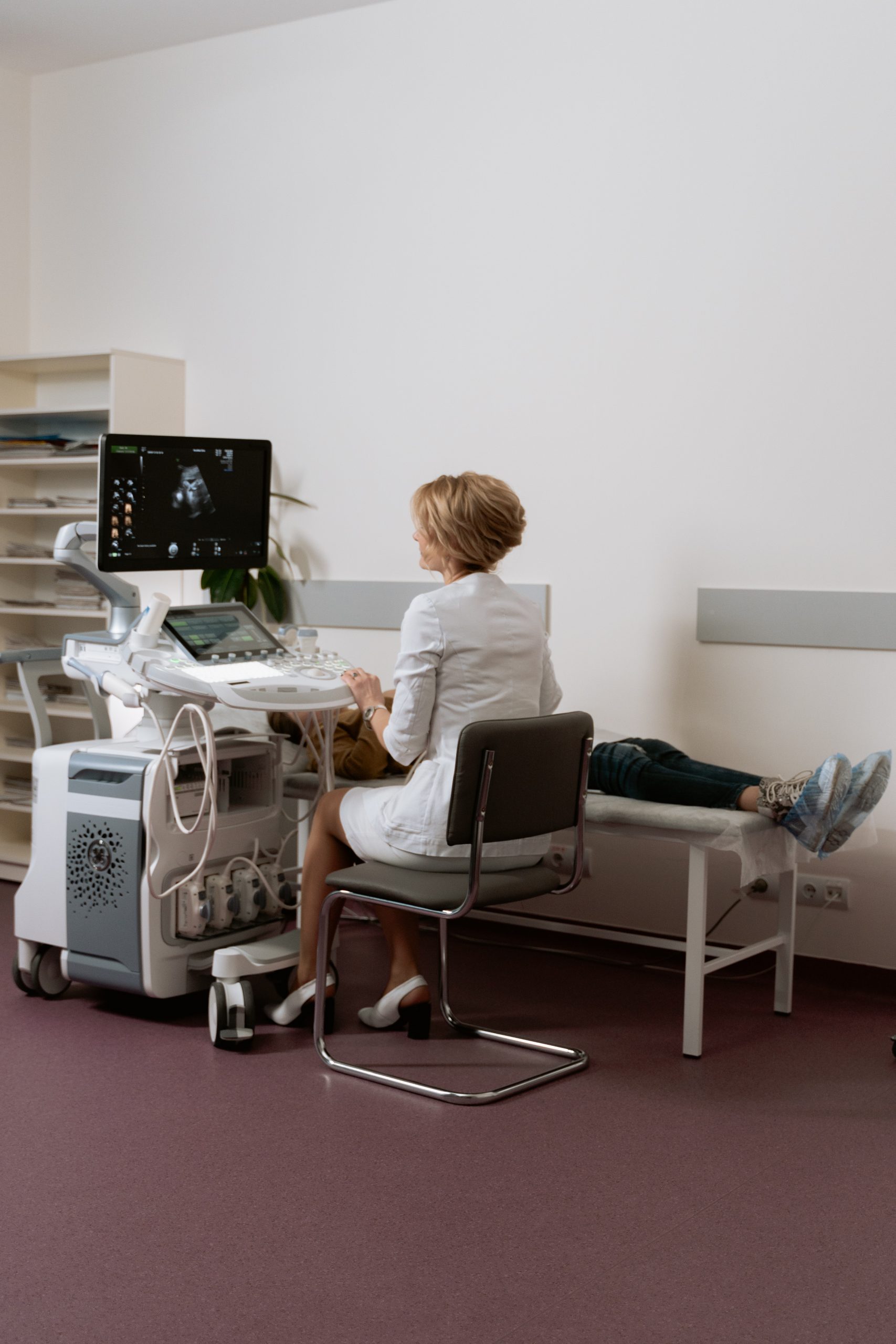
Diagnostic medical sonography student learning to perform an ultrasound examination

Diagnostic Medical Sonography Career Guide

Diagnostic Medical Sonography Careers: What You Can Do With a DMS Degree

Explore what diagnostic medical sonographers do, where they work, the specialties they may pursue, career outlook and salary considerations, and the education commonly required to enter the field.

A career that combines patient care, science, and imaging technology

Understanding a Career in Diagnostic Medical Sonography

Diagnostic medical sonography is a healthcare profession built around the use of ultrasound imaging. Sonographers work directly with patients, operate specialized equipment, and create images that physicians use when evaluating organs, tissues, blood flow, pregnancies, and other medical concerns.

The profession may appeal to people who enjoy healthcare, technology, anatomy, problem-solving, and meaningful patient interaction. It also offers several specialty paths and work environments. However, sonography is not simply “taking pictures.” It requires careful patient positioning, technical judgment, attention to image quality, communication with healthcare professionals, and the physical ability to perform examinations safely.

Quick Answer

What is a diagnostic medical sonography career?

A diagnostic medical sonography career involves using high-frequency sound waves and ultrasound equipment to create images of structures inside the body. Sonographers prepare and position patients, perform examinations, evaluate image quality, document findings, and communicate relevant information to interpreting physicians and other members of the healthcare team.

Career opportunities may be found in hospitals, physician offices, outpatient imaging centers, medical and diagnostic laboratories, specialty clinics, and other healthcare settings. Education, certification, employer requirements, work schedules, and available specialties vary by location and position.

The Profession

What Is Diagnostic Medical Sonography?

Diagnostic medical sonography uses ultrasound technology to generate real-time images of the body's internal structures. Unlike imaging methods that use ionizing radiation, diagnostic ultrasound uses sound waves. A transducer sends sound waves into the body and receives returning echoes. The ultrasound system processes those echoes into images that can be viewed, measured, and documented.

Sonography may be used to examine the abdomen, pelvis, reproductive system, superficial structures, blood vessels, and other areas. The exact examinations a sonographer performs depend on the sonographer's education, credentials, specialty, employer, and scope of practice.

Sonographer vs. ultrasound technician: The terms are often used interchangeably in everyday conversation. “Diagnostic medical sonographer” is the more precise professional title because the role involves patient care, anatomy, pathology recognition, image optimization, and clinical judgment—not merely operating a machine.

Responsibilities

What Does a Diagnostic Medical Sonographer Do?

A sonographer's responsibilities begin before the first image appears on the screen. The role combines patient preparation, technical scanning, image evaluation, documentation, equipment care, and communication with physicians and other healthcare professionals.

Prepare the patient

Confirm the examination, review available history, explain the procedure, answer appropriate questions, and help the patient feel as comfortable as possible.

Position the patient

Adjust the examination table, equipment, supports, and patient position to obtain the required views while protecting patient dignity and safety.

Perform the examination

Select appropriate settings, move the transducer, identify anatomy, obtain measurements, and capture images or clips that meet the examination protocol.

Evaluate image quality

Recognize when additional views or adjustments may be needed and ensure the images are technically useful before the patient leaves.

Document the study

Label and store images, record required information, follow workplace procedures, and communicate relevant observations to the interpreting provider.

Maintain a safe environment

Follow infection-control practices, support equipment care, maintain patient confidentiality, and comply with clinical and professional standards.

Sonographers do not independently diagnose patients. They produce and document diagnostic-quality information for review by physicians or other qualified interpreting providers.

Work Environments

Where Do Diagnostic Medical Sonographers Work?

Sonographers work wherever ultrasound examinations are performed. The workplace affects the types of patients seen, the pace of the day, scheduling expectations, equipment used, and the examinations performed.

Hospitals

May include inpatient, outpatient, emergency, surgical, and bedside examinations.

Physician Offices

Often focused on the needs of a particular practice, such as obstetrics and gynecology.

Imaging Centers

Typically schedule diagnostic examinations for patients referred by healthcare providers.

Emergency Settings

May require urgent examinations and close collaboration with emergency-care teams.

Specialty Clinics

May focus on vascular, women's health, breast, fertility, urology, or other specialty services.

Mobile Imaging

May involve traveling between facilities and performing examinations with portable systems.

Education

Experienced professionals may move into laboratory instruction, clinical education, or program support.

Research and Industry

Some experienced sonographers support research, equipment applications, product education, or clinical sales.

Career Paths

Diagnostic Medical Sonography Specialties

Sonography is not one single type of examination. Professionals may focus on one specialty or perform a combination of studies, depending on their education, credentials, employer, and department.

Abdominal Sonography

Focus: Structures such as the liver, gallbladder, pancreas, spleen, kidneys, and abdominal vessels.

Common settings: Hospitals, imaging centers, and physician offices.

Obstetric and Gynecologic Sonography

Focus: Pregnancy, fetal development, and the female reproductive system.

Common settings: Hospitals, OB/GYN practices, maternal-fetal medicine, and imaging centers.

Vascular Sonography

Focus: Blood flow and the condition of arteries and veins.

Common settings: Hospitals, vascular labs, cardiology practices, and outpatient centers.

Breast Sonography

Focus: Breast tissue and areas that require additional evaluation.

Common settings: Women's imaging centers, hospitals, and breast-care practices.

Musculoskeletal Sonography

Focus: Muscles, tendons, ligaments, joints, and certain soft-tissue structures.

Common settings: Orthopedic, sports medicine, rheumatology, and imaging practices.

Pediatric Sonography

Focus: Diagnostic ultrasound examinations for infants and children.

Common settings: Children's hospitals, pediatric clinics, and specialty imaging departments.

Small-Parts Sonography

Focus: Superficial structures such as the thyroid, scrotum, and other small organs or tissues.

Common settings: Hospitals, imaging centers, endocrinology, and urology practices.

Cardiac Sonography

Focus: The heart and cardiac function through echocardiography.

Important: Echocardiography is generally treated as a distinct specialty and may require specialized education and credentialing beyond a general DMS curriculum.

Day in the Life

What Is a Typical Sonographer Workday Like?

No two days are identical, but a scheduled outpatient shift may follow a pattern like this:

  1. 1

    Review the schedule

    Check examination types, patient information, equipment readiness, and any special preparation instructions.

  2. 2

    Prepare and greet the patient

    Confirm identity, review the order and history, explain the examination, and position the patient.

  3. 3

    Perform the ultrasound examination

    Acquire required views, optimize settings, take measurements, and adapt the examination when necessary.

  4. 4

    Complete documentation

    Label images, enter technical information, and follow departmental communication procedures.

  5. 5

    Reset and continue

    Clean equipment, prepare the room, coordinate with coworkers, and move to the next scheduled or urgent examination.

Hospital shifts may be less predictable. A sonographer may be called to an emergency department, inpatient room, intensive-care unit, operating area, or another location where portable ultrasound is required.

Career Readiness

Skills That Help Sonographers Succeed

Communication

Explain procedures clearly and communicate professionally with patients, physicians, and coworkers.

Attention to Detail

Follow protocols, identify subtle differences, label images correctly, and document examinations accurately.

Critical Thinking

Adjust technique based on anatomy, patient condition, image quality, and the purpose of the examination.

Compassion

Work respectfully with people who may be anxious, uncomfortable, seriously ill, or receiving uncertain news.

Hand-Eye Coordination

Move the transducer while interpreting the screen and adjusting equipment controls.

Technical Ability

Understand ultrasound physics, equipment controls, image optimization, and digital documentation systems.

Professionalism

Protect patient privacy, follow ethical expectations, accept feedback, and work responsibly as part of a team.

Adaptability

Respond to different body types, examination conditions, work environments, schedules, and technologies.

Physical Endurance

Stand, reach, move equipment, position patients, and maintain scanning posture throughout the workday.

What Students Should Know

Is Sonography Physically Demanding?

Sonography can be physically demanding. Sonographers may stand for extended periods, move equipment, reach across examination tables, support or reposition patients, and hold the transducer in sustained positions. Repetitive movement and awkward posture can place stress on the shoulder, neck, back, wrist, and hand.

Ergonomics = arranging movements, posture, equipment, and the workspace to reduce strain and injury risk. Good habits include adjusting the table and monitor, keeping the patient close, changing position when possible, using equipment supports, and asking for assistance when moving patients.

Physical readiness matters

Prospective students should understand both the technical and physical expectations of the profession. Clinical sites and employers may have essential-function requirements related to standing, lifting, mobility, vision, hearing, communication, and safe patient care.

Hours and Shifts

What Schedules Do Sonographers Work?

Most diagnostic medical sonographers work full time, according to the U.S. Bureau of Labor Statistics. Schedules vary substantially by workplace.

SettingCommon Schedule PatternWhat to Expect
HospitalDays, evenings, nights, weekends, holidays, or on-call rotationUrgent, inpatient, outpatient, bedside, and emergency examinations may occur.
Physician officePrimarily scheduled weekday hoursMore predictable appointment flow, often focused on one patient population.
Outpatient imaging centerScheduled day or extended-hour shiftsSteady volume of referred diagnostic examinations.
Mobile imagingVaries by route and facility demandTravel between sites and portable equipment setup may be required.
PRN or part timeAs-needed coverageHours may vary and may include weekend or leave coverage.

Labor-Market Information

Diagnostic Medical Sonographer Salary and Career Outlook

$89,340

National median annual wage in May 2024

13%

Projected employment growth from 2024 to 2034

11,700

Projected average openings per year during the decade

The U.S. Bureau of Labor Statistics reported a national median annual wage of $89,340 for diagnostic medical sonographers in May 2024. It projected employment in the occupation to grow 13% from 2024 to 2034, which it classified as much faster than the average for all occupations.

A median is not a starting salary and is not a promise of earnings. Actual compensation varies by geographic area, experience, credentials, specialty, employer, shift, responsibilities, and local labor-market conditions. Students should review current state and metropolitan-area data when evaluating salary expectations.

Review the current U.S. Bureau of Labor Statistics profile for diagnostic medical sonographers.

Career-outcome disclosure: Completion of an educational program does not guarantee certification, licensure, employment, salary, job placement, or career advancement. Employment opportunities and requirements vary by employer, location, credentials, experience, and labor-market conditions.

Education Path

How to Become a Diagnostic Medical Sonographer

The exact path depends on employer and credentialing requirements, but the process commonly includes the following steps:

  1. 1

    Complete high school or an equivalent credential

    Courses in anatomy, physiology, biology, physics, algebra, and communication can provide useful preparation.

  2. 2

    Research sonography education options

    Compare degree type, curriculum, clinical education, accreditation, admissions requirements, outcomes, cost, schedule, and credentialing pathways.

  3. 3

    Complete didactic, laboratory, and clinical education

    Sonography education typically includes anatomy, medical terminology, ultrasound physics, patient care, image evaluation, specialty coursework, hands-on laboratory learning, and supervised clinical experience.

  4. 4

    Graduate and review credentialing requirements

    Credential eligibility depends on the certification organization, examination, education pathway, documentation, and specialty. Employers may require or prefer professional certification.

  5. 5

    Apply for entry-level positions

    Prepare a professional résumé, gather required documentation, practice interviewing, and evaluate employer expectations related to schedule, credentials, patient care, and physical demands.

  6. 6

    Continue learning

    Maintain required credentials, complete continuing education, follow professional standards, and develop specialty knowledge over time.

Students should confirm current credentialing requirements directly with organizations such as the American Registry for Diagnostic Medical Sonography, the American Registry of Radiologic Technologists, or other credentialing bodies relevant to their intended pathway.

Long-Term Possibilities

Career Growth Opportunities in Sonography

Career development may involve adding credentials, gaining experience in additional examination types, accepting leadership responsibilities, or moving into related healthcare-technology roles. Opportunities vary by employer and may require additional education or experience.

Specialty Sonographer

Develop deeper expertise in areas such as abdomen, OB/GYN, breast, vascular, or musculoskeletal sonography.

Lead or Senior Sonographer

Support workflow, quality practices, staff development, scheduling, or departmental coordination.

Clinical Instructor

Help students connect classroom knowledge with supervised clinical practice.

Education or Program Support

Teach laboratory courses, coordinate clinical experiences, or pursue academic leadership with appropriate qualifications.

Applications Specialist

Support healthcare organizations as they learn to use ultrasound systems and imaging features.

Management, Research, or Industry

Experienced professionals may pursue operations, research, quality, equipment, sales, or training roles.

Compare Healthcare Paths

DMS Compared With MRI, Radiologic Technology, and Nursing

CareerPrimary FocusTechnology or Care ModelPatient Interaction
Diagnostic Medical SonographyReal-time ultrasound imagingHigh-frequency sound waves and transducer-based scanningClose, hands-on interaction during examinations
MRI TechnologyCross-sectional diagnostic imagingMagnetic fields, radiofrequency energy, coils, and MRI scannersPatient screening, positioning, communication, and monitoring
Radiologic TechnologyGeneral radiographic imagingX-ray equipment and ionizing radiationPositioning and imaging patients across many clinical situations
NursingAssessment, treatment, monitoring, education, and coordination of careBroad clinical care rather than one imaging modalityContinuous or recurring care depending on the role and setting

Decision Guide

Is Diagnostic Medical Sonography Right for You?

A sonography career may be worth exploring when several of the following statements describe you:

  • I enjoy learning anatomy, physiology, and medical science.
  • I want a healthcare role with direct patient interaction.
  • I am interested in imaging technology and visual problem-solving.
  • I can communicate calmly with people who may be anxious or uncomfortable.
  • I pay close attention to details and can follow technical protocols.
  • I am comfortable learning physics and equipment controls.
  • I can accept feedback and improve through repeated hands-on practice.
  • I understand that healthcare may involve standing, lifting, reaching, and nontraditional schedules.
  • I want a profession that requires continued learning and professional responsibility.

Career fit is personal. A strong next step is to speak with admissions representatives, review the curriculum, understand clinical and physical expectations, and compare sonography with other healthcare careers.

Beckfield College

Study Diagnostic Medical Sonography in Florence, Kentucky

Beckfield College offers an Associate of Applied Science in Diagnostic Medical Sonography at its Florence, Kentucky campus, serving students in Northern Kentucky and the Greater Cincinnati area.

The current program page lists the program at 24 months or 88 weeks. The curriculum is designed to combine classroom instruction, laboratory learning, patient-care preparation, ultrasound principles, image evaluation, and supervised clinical education.

  • Associate of Applied Science degree
  • Ultrasound equipment and scanning instruction
  • Anatomy, physiology, pathology, and ultrasound physics
  • Patient care, ethics, and professional development
  • Laboratory practice and clinical education
  • Support services available through Beckfield College

Students interested in current admissions requirements, start dates, tuition, financial aid, curriculum, accreditation information, and credentialing preparation should review the official program page and current Beckfield College catalog.

Important Education and Career Disclosure

Credentialing, certification, licensure, clinical placement, and employer requirements vary. Students are responsible for reviewing the requirements that apply to their intended specialty, credential, state, and employer. Program completion does not guarantee examination eligibility or success, certification, licensure, employment, job placement, salary, or career advancement.

Jena Hernandez, Program Director of Diagnostic Medical Sonography at Beckfield College

Reviewed By

Jena Hernandez

Program Director, Diagnostic Medical Sonography, Beckfield College

Jena Hernandez serves as Beckfield College's Program Director for Diagnostic Medical Sonography. She holds a Master of Health Administration from the University of Cincinnati and a Bachelor of Science in Diagnostic Medical Sonography from Grand Valley State University.

Frequently Asked Questions

Diagnostic Medical Sonography Career FAQs

What is a diagnostic medical sonographer?

A diagnostic medical sonographer is a healthcare professional who uses ultrasound equipment to create images of structures inside the body. Sonographers prepare patients, perform examinations, evaluate image quality, document studies, and communicate with interpreting physicians and healthcare teams.

What is the difference between sonography and ultrasound?

Ultrasound is the imaging technology and examination method. Sonography refers to the professional practice of creating and evaluating ultrasound images. In everyday use, the terms are often used interchangeably.

Is an ultrasound technician the same as a sonographer?

The terms are often used to describe the same occupation, but “diagnostic medical sonographer” is the more precise professional title because the role includes patient care, anatomy, image optimization, documentation, and clinical judgment.

What does a sonographer do every day?

A sonographer may review examination orders, prepare and position patients, operate ultrasound equipment, obtain images and measurements, evaluate image quality, document the study, clean equipment, and coordinate with physicians and coworkers.

Where do sonographers work?

Sonographers may work in hospitals, physician offices, outpatient imaging centers, medical and diagnostic laboratories, specialty clinics, emergency settings, mobile imaging services, education, research, or healthcare technology companies.

Do sonographers work nights or weekends?

Some do. Hospitals and other 24-hour facilities may require evening, overnight, weekend, holiday, or on-call coverage. Physician offices and outpatient centers may offer more predictable scheduled hours.

Is diagnostic medical sonography physically demanding?

It can be. Sonographers may stand for long periods, move equipment, reach across examination tables, position patients, and perform repetitive scanning movements. Good ergonomics and safe patient-handling practices are important.

How long does it take to become a diagnostic medical sonographer?

The timeline depends on the education pathway and program. Beckfield College's current Diagnostic Medical Sonography program page lists its Associate of Applied Science program at 24 months or 88 weeks. Actual completion time may vary.

What degree is commonly needed for sonography?

The U.S. Bureau of Labor Statistics states that diagnostic medical sonographers typically need at least an associate's degree or a postsecondary certificate. Employer and credentialing requirements vary.

Is certification required to work as a sonographer?

Requirements vary. Some employers require or prefer professional certification, and some jurisdictions may have licensing requirements. Prospective students should review current requirements for their intended employer, state, specialty, and credential.

Can sonographers specialize?

Yes. Specialty areas may include abdominal, obstetric and gynecologic, vascular, breast, musculoskeletal, pediatric, and small-parts sonography. Additional education, clinical experience, or credentials may be required.

Is cardiac sonography part of diagnostic medical sonography?

Cardiac sonography uses ultrasound to examine the heart, but echocardiography is generally treated as a distinct specialty. It may require specialized education, clinical preparation, and credentialing.

Can men become diagnostic medical sonographers?

Yes. Diagnostic medical sonography is open to qualified people of any gender. Professionalism, technical skill, communication, patient dignity, and respectful care are essential for every sonographer.

Is sonography school difficult?

Sonography education can be challenging because it combines anatomy, physiology, pathology, ultrasound physics, equipment operation, image interpretation, patient care, laboratory practice, and clinical education.

Is math required for sonography?

Students use math concepts in areas such as measurements, formulas, hemodynamics, and ultrasound physics. Program coursework helps students apply the math needed for scanning and image evaluation.

Is physics used in sonography?

Yes. Ultrasound physics explains how sound waves travel, interact with tissues, produce echoes, and become images. It also supports safe and effective equipment operation and image optimization.

How much patient interaction do sonographers have?

Sonographers generally have substantial direct patient interaction. They explain examinations, position patients, scan at close range, monitor comfort, and communicate throughout the procedure.

Do sonographers diagnose patients?

No. Sonographers obtain and document diagnostic images and communicate relevant technical information. Physicians or other qualified interpreting providers make the medical diagnosis.

Can sonographers travel for work?

Travel opportunities may exist through mobile imaging services, temporary assignments, or multi-site employers. Travel roles usually require appropriate experience, credentials, flexibility, and compliance with employer requirements.

Can a sonographer later become an MRI technologist?

It may be possible, but MRI is a different imaging modality with separate education, safety, clinical, and credentialing requirements. A sonographer would need to meet the requirements of the selected MRI pathway and employer.

What is the salary for a diagnostic medical sonographer?

The U.S. Bureau of Labor Statistics reported a national median annual wage of $89,340 in May 2024. This is not a starting salary or earnings guarantee. Pay varies by location, experience, credentials, specialty, employer, shift, and duties.

What is the job outlook for diagnostic medical sonographers?

The U.S. Bureau of Labor Statistics projected 13% employment growth for diagnostic medical sonographers from 2024 to 2034. Projections describe the occupation nationally and do not guarantee local openings or employment for graduates.

What should I look for in a DMS program?

Review the curriculum, clinical education, accreditation, credentialing pathways, admissions requirements, program length, cost, schedule, faculty qualifications, student support, outcomes, and physical or technical expectations.

Does Beckfield College offer hands-on sonography training?

Beckfield College describes its DMS curriculum as including integrated analysis, hands-on training, ultrasound equipment instruction, patient care preparation, and clinical education. Review the current program page and catalog for complete details.

How can I learn more about Beckfield College's DMS program?

Visit the official Diagnostic Medical Sonography program page or submit a Request Information form to speak with Beckfield College about admissions, start dates, curriculum, tuition, financial aid, and program requirements.

Sources and Further Reading

Take the Next Step

Ready to Learn More About Diagnostic Medical Sonography?

Explore Beckfield College's Associate of Applied Science in Diagnostic Medical Sonography and speak with the admissions team about current program details.

View the Diagnostic Medical Sonography Program